
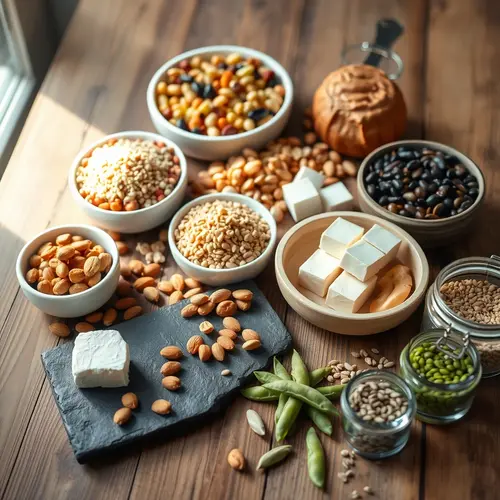
top vegan protein sources
Top Vegan Protein Sources: 15 Essential Options
Table of Contents
When building a plant-based diet, identifying the top vegan protein sources is essential for meeting your daily protein requirements without animal products. Plant proteins offer complete amino acid profiles when combined strategically, and many provide additional benefits like fiber, vitamins, and minerals that animal proteins lack.
Why Top Vegan Protein Sources Matter for Your Health
Protein serves as the building block for muscles, enzymes, and hormones. The Academy of Nutrition and Dietetics confirms that well-planned vegan diets can meet protein needs at all life stages.
Unlike animal proteins, plant-based options typically contain zero cholesterol and less saturated fat. They also deliver antioxidants and phytonutrients that support cardiovascular health and reduce inflammation.
The key lies in consuming a variety of sources throughout the day. Your body doesn’t require all amino acids in a single meal—it pools them over a 24-hour period.
Complete Protein Powerhouses
Quinoa and Other Ancient Grains
Quinoa stands out among top vegan protein sources as one of the few plant foods containing all nine essential amino acids. One cup of cooked quinoa delivers 8 grams of protein.
Amaranth and buckwheat offer similar complete protein profiles. These pseudocereals provide lysine, an amino acid often limited in other grains.
Soy-Based Foods
Tofu, tempeh, and edamame represent the gold standard. A half-cup of firm tofu provides 20 grams of complete protein.
Tempeh undergoes fermentation, which increases protein digestibility and adds beneficial probiotics. Three ounces contain 16 grams of protein with a nutty, earthy flavor that absorbs marinades exceptionally well.
Legumes: The Foundation of Plant Protein
Beans, lentils, and peas form the backbone of vegan nutrition. These top vegan protein sources offer exceptional value per serving.
| Legume | Protein per Cup (cooked) | Key Benefit |
|---|---|---|
| Lentils | 18g | High in folate and iron |
| Chickpeas | 15g | Versatile, fiber-rich |
| Black beans | 15g | Antioxidant anthocyanins |
| Split peas | 16g | Budget-friendly, quick-cooking |
Lentils cook faster than most beans and require no soaking. Red lentils break down into creamy textures perfect for soups and dal.
Strategic Pairing for Complete Proteins
The outdated myth that you must combine proteins at every meal has been thoroughly debunked by nutritional science. However, pairing legumes with whole grains throughout the day ensures you obtain all essential amino acids.
Classic combinations include rice and beans, hummus with whole wheat pita, or peanut butter on whole grain bread. These pairings work because grains provide methionine while legumes supply lysine.
Nuts and Seeds: Concentrated Nutrition
These calorie-dense top vegan protein sources pack healthy fats alongside protein. Hemp seeds contain all essential amino acids and deliver 10 grams of protein per three tablespoons.
- Pumpkin seeds: 9 grams per ounce, rich in zinc and magnesium
- Almonds: 6 grams per ounce, excellent vitamin E source
- Chia seeds: 5 grams per ounce, omega-3 fatty acids included
- Peanut butter: 8 grams per 2 tablespoons, satisfying and versatile
Soaking nuts overnight enhances digestibility by reducing phytic acid content. This simple step increases mineral absorption and makes proteins more bioavailable.
Specialty Plant Proteins
Seitan: The Wheat Protein Champion
Made from vital wheat gluten, seitan provides a meat-like texture with 25 grams of protein per 3.5 ounces. It absorbs flavors remarkably well, making it ideal for stir-fries and sandwiches.
Those with celiac disease or gluten sensitivity must avoid seitan entirely. It represents pure gluten protein.
Spirulina and Nutritional Yeast
Spirulina, a blue-green algae, contains 4 grams of protein per tablespoon. While you won’t consume large quantities, it supplements smoothies effectively.
Nutritional yeast delivers 8 grams per two tablespoons with a savory, cheese-like flavor. The USDA recognizes it as a complete protein source, and fortified versions provide vitamin B12, which vegans typically lack.
Expert Opinion: The Protein Quality Debate
Many transitioning vegans worry about protein quality. Research published in the Journal of the International Society of Sports Nutrition demonstrates that plant proteins support muscle building equally when total protein intake meets requirements.
The real concern isn’t quality but quantity and variety. Athletes and highly active individuals may need 1.6 to 2.2 grams per kilogram of body weight. Consuming diverse top vegan protein sources throughout the day easily achieves this target.
One common mistake involves over-relying on protein powders. Whole food sources provide fiber, vitamins, and minerals that isolated proteins lack. Save powders for convenience, not as dietary staples.
Practical Implementation Strategy
Building meals around these top vegan protein sources requires simple planning. Start each meal with a legume, soy product, or seitan as your base.
Add nuts or seeds for texture and additional protein. Include whole grains to round out amino acid profiles. A typical day might include oatmeal with hemp seeds for breakfast, a lentil soup with whole grain bread for lunch, and tofu stir-fry with quinoa for dinner.
Protein-Rich Snacks
- Roasted chickpeas seasoned with spices
- Hummus with raw vegetables
- Trail mix combining nuts and seeds
- Edamame with sea salt
- Protein smoothies with silken tofu or plant-based powder
Meeting Your Daily Requirements
The recommended dietary allowance stands at 0.8 grams per kilogram of body weight for sedentary adults. A 150-pound person needs approximately 54 grams daily.
Spread protein intake across meals for optimal absorption. Your body processes approximately 20-30 grams per meal most efficiently, though it won’t waste excess protein as commonly believed.
Digestibility varies among plant proteins. Soy and quinoa rank highest at 90% digestibility, while beans and lentils average 70-80%. Proper cooking, soaking, and sprouting improve these rates.
Final Considerations
Incorporating these top vegan protein sources into your diet supports overall health while meeting nutritional needs. Focus on whole foods first, maintain variety, and don’t obsess over hitting perfect amino acid ratios at every meal.
Your body handles protein synthesis efficiently when you provide diverse plant proteins throughout the day. The combination of legumes, whole grains, nuts, seeds, and soy products creates a nutritionally complete foundation for any vegan eating pattern.

Wibi Sena is a senior nutrition writer at Organic Raw Diet covering evidence-based vegan nutrition and plant protein. 5+ years, 200+ guides. Method: RCTs, USDA database, and Cochrane reviews. Author of 1,641 nutrition guides since 2022.