
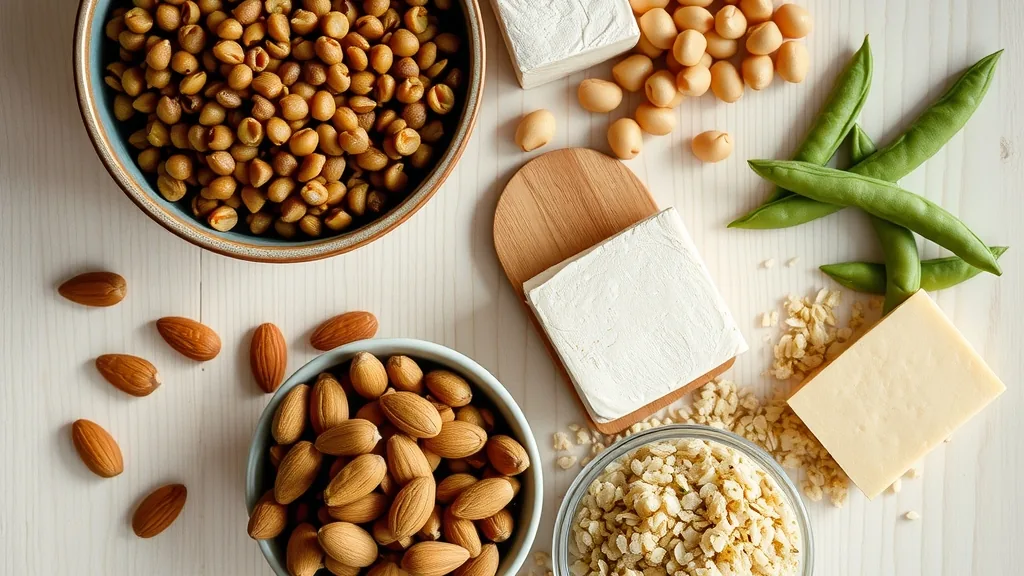
Plant-Based Protein Guide: How Much You Need and Where to Get It
Table of Contents
Most people asking about plant-based protein have the same two worries: whether they can get enough, and whether plant protein is “complete.” Both concerns are answerable with arithmetic rather than anxiety. This guide covers daily targets, the strongest sources per serving, how to combine foods, and the practical details that matter for athletes, older adults, and anyone transitioning from a meat-centered plate.
How Much Protein Do You Actually Need
General guidance for healthy adults is 0.8 grams per kilogram of body weight per day, which is the minimum to prevent deficiency, not the optimum for strength or healthy aging. Practical ranges used in nutrition practice:
- Sedentary adults: 1.0 to 1.2 g/kg.
- Active adults and recreational athletes: 1.2 to 1.6 g/kg.
- Strength training and muscle gain: 1.6 to 2.0 g/kg.
- Adults over 65: 1.2 to 1.5 g/kg to counter age-related muscle loss.
For a 70 kg person training three times a week, that is roughly 100 to 110 grams per day, or about 30 grams at each main meal plus a protein-focused snack. Plant sources are slightly less digestible than animal protein, so aim for the upper end of your range rather than the minimum.
The Best Plant-Based Protein Sources
| Food (cooked unless noted) | Protein per 100 g | Protein per realistic serving | Notes |
|---|---|---|---|
| Seitan (wheat gluten) | 25 g | 30 g per 120 g | Highest protein density, but not suitable for celiac disease |
| Tempeh | 19 g | 28 g per 150 g | Fermented soy, firm texture, good for grilling |
| Firm tofu | 15 g | 23 g per 150 g | Press before cooking for better browning |
| Lentils | 9 g | 18 g per 200 g | Cheap, high fiber, iron, and folate |
| Chickpeas | 8 g | 16 g per 200 g | Also a strong fiber and potassium source |
| Edamame | 11 g | 17 g per 150 g | Complete protein, good frozen staple |
| Hemp seeds | 31 g | 9 g per 30 g | Omega-3 rich, no cooking needed |
| Pumpkin seeds | 30 g | 9 g per 30 g | Magnesium and zinc |
| Quinoa | 4.4 g | 8 g per 185 g | Complete protein, but a side not a main |
| Soy milk, unsweetened | 3.3 g | 8 g per 250 ml | Closest plant milk to dairy protein quality |
Two observations matter more than any single row. First, legumes and soy foods do the heavy lifting; seeds and grains top up. Second, protein density per 100 g is not the same as protein per serving, so build meals around a full portion of tofu, tempeh, or beans rather than a sprinkle of seeds.
If you want a shorter shortlist, our top vegan protein sources ranks these by cost and versatility, and the high-protein vegetarian diet guide shows how to hit 100 grams in a day.
Is Plant Protein “Incomplete”?
The old idea that you must carefully pair rice and beans at every meal is outdated. Almost all plant foods contain all nine essential amino acids; they simply have less of one or two. Your body maintains a free amino acid pool, so eating a varied diet across the day covers the gaps. Legumes are low in methionine, grains are low in lysine, and together they balance, but you do not need them in the same bite.
Practical rule: include a legume or soy food at two meals and a whole grain at two meals, and the completeness question disappears. Soy, quinoa, buckwheat, hemp, and amaranth are complete on their own.
Digestibility and Anti-Nutrients
Plant proteins are absorbed slightly less efficiently, partly because of fiber and phytates. Cooking, soaking, sprouting, and fermenting all help. Tempeh and miso are fermented; soaked lentils cook faster and are easier to digest; sprouted grains and legumes reduce phytate content. None of this requires perfection. It means choosing cooked over raw and varied over repetitive.
If you feel bloated when you increase beans quickly, raise intake over two to three weeks and rinse canned beans well. Your gut bacteria adapt to the fiber load, and the adjustment is temporary.
Building a Day That Hits Target
Here is a 105-gram day for a 65 kg active adult, all from ordinary foods:
- Breakfast: oats with 250 ml soy milk, 30 g hemp seeds, and berries. About 24 g.
- Lunch: lentil and vegetable bowl with 200 g cooked lentils and 100 g quinoa. About 28 g.
- Snack: 150 g edamame. About 17 g.
- Dinner: 150 g tempeh stir-fry with rice and greens. About 30 g.
That leaves room for fruit, vegetables, and fats without counting every gram. Rotate tempeh for tofu, lentils for chickpeas, and the pattern holds.
Athletes, Older Adults, and Supplement Reality
Strength athletes do well on 1.6 to 2.0 g/kg spread across four meals, with 20 to 40 grams per meal. Plant-based athletes may benefit from slightly higher totals and from leucine-rich foods such as soy, pumpkin seeds, and potatoes. Older adults should push toward 1.2 to 1.5 g/kg and include protein at breakfast rather than loading it all at dinner.
Protein powder is convenient, not magic. Pea, soy, and blended powders are cheap per gram and useful on busy days. Whole foods should carry most of the load because they bring iron, zinc, calcium, and fiber along with the amino acids.
For athletes specifically, the complete protein for vegan athletes guide covers timing around training and recovery in more detail.
What to Watch Beyond Protein
Three nutrients deserve attention on a plant-based diet: vitamin B12, iron, and omega-3 fats. B12 is not reliably available from plants, so use a supplement or fortified foods. Plant iron is absorbed better with vitamin C and worse with tea or coffee at the same meal. For omega-3, use flax, chia, hemp, or walnuts, or take an algae oil supplement.
Get those three right and protein becomes the easy part of the plate, not the limiting one.
Can you get enough protein without supplements?
Yes. Legumes, soy foods, and whole grains cover typical needs. A 70 kg active adult can reach 100 grams a day with three meals built around tofu, lentils, and tempeh.
Do I need to combine foods at every meal?
No. Your body pools amino acids across the day. Eat a variety of legumes, grains, and seeds and completeness takes care of itself.
Is plant protein worse for muscle building?
Slightly lower digestibility means you may need a little more total protein, but muscle gains are comparable when totals and resistance training are matched.
Which plant food has the most protein?
Seitan has the highest protein density, followed by tempeh and tofu. Hemp and pumpkin seeds are the strongest easy add-ons.

Wibi Sena is a senior nutrition writer at Organic Raw Diet covering evidence-based vegan nutrition and plant protein. 5+ years, 200+ guides. Method: RCTs, USDA database, and Cochrane reviews. Author of 1,641 nutrition guides since 2022.