
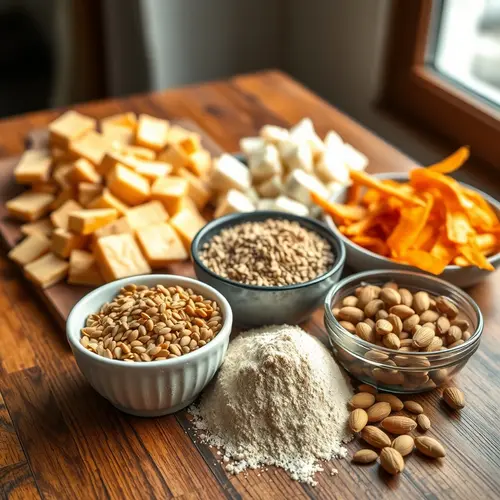
Top 7 High Protein Vegan Foods Low-Carb for Muscle
Table of Contents
Top Sources of high protein vegan foods low-carb
The table below shows common vegan proteins that fit the high protein vegan foods low-carb profile, listing typical serving size, protein content, and net carbs.| Food | Serving Size | Protein (g) | Net Carbs (g) |
|---|---|---|---|
| Tempeh | 100 g | 19 | 9 |
| Firm Tofu | 100 g | 8 | 2 |
| Seitan | 100 g | 25 | 3 |
| Hemp Seeds | 3 Tbsp | 10 | 2 |
| Pea Protein Isolate | 1 scoop (≈30 g) | 24 | <1 |
| Almonds | ¼ cup | 6 | 3 |
| Pumpkin Seeds | ¼ cup | 9 | 4 |
How to Add high protein vegan foods low-carb to Your Daily Routine
Start the day with a smoothie blending pea protein isolate, unsweetened almond milk, and a handful of spinach for a quick, low‑carb boost. For lunch, grill tempeh slices with low‑sodium soy sauce and serve over a bed of mixed greens topped with hemp seeds. Snack on a small portion of almonds or pumpkin seeds to curb hunger between meals without adding significant carbs. Dinner can feature a seitan stir‑fry with broccoli and bell peppers, finished with a drizzle of tahini for extra flavor. Dr. Lena Martinez, a sports nutrition specialist at the National Institutes of Health, observes that athletes who meet leucine thresholds with plant‑based options often experience recovery comparable to those consuming animal‑based protein. Consider a hypothetical client, Alex, who struggled to stay under 30 grams of net carbs while hitting 100 grams of protein daily. By swapping a cup of cooked lentils (≈40g net carbs) for 150g of tempeh (≈9g net carbs) and adding two tablespoons of hemp seeds, Alex reduced carb intake by over 50 grams without sacrificing protein.High Protein Vegan Foods Weekly Meal Plan
Rotate tempeh stir-fries, tofu scrambles and seitan skewers across the week so high protein vegan foods never bore you. Prep two proteins every Sunday, portion into containers, and pair with low-carb vegetables daily. Planning removes guesswork and keeps macros steady without tracking apps.
Smart Shopping on a Budget
Buy tofu, tempeh and textured soy in bulk from Asian grocers where prices run lowest. Frozen edamame and hemp hearts stretch further than boutique bars. Compare unit prices, not package sizes, and stock up during sales cycles.
Mistakes That Add Hidden Carbs
Restaurant bowls hide syrups in dressings and breading on proteins that menus never flag. Ask for sauces aside, grilled proteins plain, and double vegetables instead of rice. Most kitchens comply happily when requests stay simple and polite.
Eating Out Without Breaking Macros
Scan menus ahead for tofu, tempeh or bean mains before arriving hungry. Build bowls around greens plus two protein toppings, skipping tortillas and sweet glazes. Business travel gets easier with a shortlist of chains publishing full nutrition panels online.
Pack emergency snacks for airports and road trips where options narrow to fries and candy. Roasted edamame, nut packs and soy crisps travel well without refrigeration. Hunger emergencies cause more diet breaks than cravings ever do.
Batch-cook sauces on weekends to rescue bland proteins fast. Tahini-lemon, peanut-lime and chimichurri keep rotation exciting for weeks. Small flavor investments prevent expensive takeout defaults.
Track energy and satiety for two weeks after switching staples. Steady afternoon focus signals working macros better than any calculator. Adjust portions gradually rather than overhauling everything overnight. Sustainable tweaks outlast dramatic resets every single time. Patience during the first fortnight pays off for months afterward. Small consistent wins always beat even occasional perfect days very easily indeed, truly.
Sauces, breadings and sweetened milks sneak carbs into otherwise clean plates. Read labels for starches and sugars hiding behind health claims. Cook plain proteins at home, then season boldly yourself.
In summary, focusing on high protein vegan foods low-carb provides a sustainable path to meet protein goals, maintain low carbohydrate intake, and enjoy diverse, flavorful meals. Compare menus in our high protein vegan meals and complete vegan proteins; guidance at Academy of Nutrition backs portions.Frequently Asked Questions (FAQs)
Which high protein vegan foods fit low-carb best?
Tempeh, tofu, seitan and hemp hearts lead on protein per carb. These high protein vegan foods anchor meals without spiking glucose.
How do you hit protein targets eating out?
Order double protein toppings, sauces aside, and greens over grains. Chain nutrition panels help pre-planning.
Do you need supplements on low-carb vegan diets?
Rarely with planning, except B12 always. Whole foods cover needs; powders only fill training gaps.
For the complete picture, see our guide to vegan protein sources.

Wibi Sena is a senior nutrition writer at Organic Raw Diet covering evidence-based vegan nutrition and plant protein. 5+ years, 200+ guides. Method: RCTs, USDA database, and Cochrane reviews. Author of 1,641 nutrition guides since 2022.